Motivasi, Artikel, dan Segala opini tentang saya
Pengen tau gan, ato juragan motivasi sekalian??? caranya Hidup Bahagia Menurut Drs. Urip Arianto , MBA alias Mbah Surip??
,,,
Percayalah, mbah Surip modal mangap + ketawa ajah bisa hidup lamaaa walaupun minumnya kopi dan nyedot rokok sajahh!!
Percayalah ini bisa membuat anda hidup bahagia :-D
Bos, sampeyan punya kerabat luar negeri yang dikengeni..? Punya nomer HP nya..? Okeh, kalo begitu anda benar membaca postingan ini. Karena ini adalah layanan SMS gratis untuk Global. Mudah-mudahan ini dapat membantu menggunakan internet anda sebagai barang yang NiKmAt...
T-mobile
Communications Centre
Espanol VZW
AllTel
Vtext
Vtext Consumer
Galsn3
CERIK
Edulms
Selldiy
Heah, yuhu.... kale ini, saya mau nulis aim untuk 2008, yah biasa lah.. Agar saat ngeblog ini jadi punya motivasi untuk gak males... Mmmaksudnya, biar ada semangat getuh.. Artikel ini terinspirasi dari impiannya Mas Cosa, cieee... walaupun pemilik blog ini gak rame-rame amat, dikunjungi.. tapi setidaknya setelah baca postingan gue jadi -Hiiksss.... - pengin lah memberikan sedikit kocek berupa opinilah, komentar lah... dsb.
Emang sich gue kagak bisa ngasih kontes review kayak di Mas Cosa , maklum koceknya juga masih BuLan TuWek.. <dobel> Hikks.. </dobel>
Langsung saja yach...
Memang sich, blog ini bukanlah setenar selebritis seperti NdoroKakung, Antobilang, TikaBanget, Bung Priyadi, Bung Budi Putra, atau seperti Bung Herman..
Okelah cukup sekian kaleidoskop tahun ini, dan mari kita memulai 2008 yang baru..!
Jadi teringat kata pepatah, "Kalau Bisa Mengimajinasi Yang Tinggi, Mengapa nglakuin yang rendah..?"
New Delhi, India
Seorang professor bahasa dari ALAHABAD UNIVERSITY INDIA dalam salah satu buku terakhirnya berjudul "KALKY AUTAR" (Petunjuk Yang Maha Agung) yang baru diterbitkan memuat sebuah pernyataan yang sangat mengagetkan kalangan intelektual Hindu.
Sang professor secara terbuka dan dengan alasan-alasan ilmiah, mengajak para penganut Hindu untuk segera memeluk agama Islam dan sekaligus mengimani risalah yang dibawa oleh Rasulullah saw, karena menurutnya, sebenarnya Muhammad Rasulullah saw adalah sosok yang dinanti-nantikan sebagai sosok pembaharu spiritual.
Prof. WAID BARKASH (penulis buku) yang masih berstatus pendeta besar kaum Brahmana mengatakan bahwa ia telah menyerahkan hasil kajiannya kepada delapan pendeta besar kaum Hindu dan mereka semuanya menyetujui kesimpulan dan ajakan yang telah dinyatakan di dalam buku. Semua kriteria yang disebutkan dalam buku suci kaum Hindu (Wedha) tentang ciri-ciri "KALKY AUTAR" sama persis dengan ciri-ciri yang dimiliki oleh Rasulullah Saw.
Dalam ajaran Hindu disebutkan mengenai ciri KALKY AUTAR diantaranya, bahwa dia akan dilahirkan di jazirah, bapaknya bernama SYANUYIHKAT dan ibunya bernama SUMANEB. Dalam bahasa sansekerta kata SYANUYIHKAT adalah paduan dua kata yaitu SYANU artinya ALLAH sedangkan YAHKAT artinya anak laki atau hamba yang dalam bahasa Arab disebut ABDUN.
Dengan demikian kata SYANUYIHKAT artinya "ABDULLAH". Demikian juga kata SUMANEB yang dalam bahasa sansekerta artinya AMANA atau AMAAN yang terjemahan bahasa Arabnya "AMINAH". Sementara semua orang tahu bahwa nama bapak Rasulullah Saw adalah ABDULLAH dan nama ibunya MINAH.
Dalam kitab Wedha juga disebutkan bahwa Tuhan akan mengirim utusan-Nya kedalam sebiuah goa untuk mengajarkan KALKY AUTAR (Petunjuk Yang Maha Agung). Cerita yang disebut dalam kitab Wedha ini mengingatkan akan kejadian di Gua Hira saat Rasulullah didatangi malaikat Jibril untuk mengajarkan kepadanya wahyu tentang Islam.
Bukti lain yang dikemukakan oleh Prof Barkash bahwa kitab Wedha juga menceritakan bahwa Tuhan akan memberikan Kalky Autar seekor kuda yang larinya sangat cepat yang membawa kalky Autar mengelilingi tujuh lapis langit. Ini merupakan isyarat langsung kejadian Isra' Mi'raj dimana Rasullah mengendarai Buroq
Akhirnya, setelah sekian lama mengupas pertempuran jotos-maya di internet daam pertandingan Indonesia-Malaysia lewat youtube, hacking-hackingan antar alamat web, kali ini, malaysia mulai menunjukkan taringnya lagi... Mereka buat blog, asar negara kita banyak diplesetin, dan ternyata mereka juga menguak sisi negatif dari berbagai marabahaya di indonesiaMemang itu merupakan kritik yang membangun, namun bagaimana masalahnya kalau "Pancasila" Sudah jadi mainan ato bulan-bulanan pemilik blog ini...?Yup, kedaulatan, harga diri dan ke-nasionalisme-an lah yang mulai disinggung, sama saja perang...Bukannya bermaksud ikut-ikutan, tetapi, liatlah senaknya saja si blogger malaysia ini.. Ini, maunya ngadu domba indonesia dengan malaysia..? Atau jadi kutukupretnya indonesia..? atau provoKATOR..? Lihatlah kalau kedaulatan indonesia telah "diejek" oleh blogger ini.. Bahkan stasitun ANTV mengundang Blogger Nasional Enda Nasution hanya untuk membahas situs SeSaT ini.. Sudah banyak situs yang mulai mem-flag situs bloger ini.. Cek disini Sudah banyak web yang isinya bertujuan menyerang blog ini, sebut saja :http://kasihanimalaysia.blogspot.com/http://malaysiamaling.blogspot.com/http://malaysia-malingsial.blogspot.com/http://www.trulyindonesia.com/Kita sebagai warga indonesia, apa yang seharusnya kita lakukan..?Bukankah ini termasuk bentuk sabotase terhadap Indonesia..?Apakah kita tidak menghargai Bendera Merah-Putih yang sudah susah payah dipertahankan oleh Republik Indonesia...!!Indonesia, Jiwaku Kuserahkan padamU..!!!
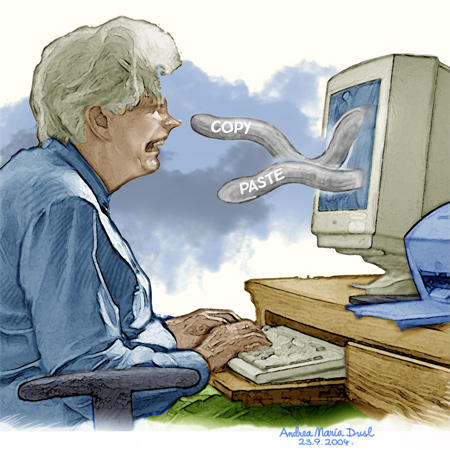
Fenomena Blog memang tidak ada habisnya, apapun layak untuk diperbincangkan, salah satunya adalah Plagiarisme atau dalam bahasa inggris, PLagiarism. Seperti yang anda ketahui bahwa pemenang pertama Lomba Nge-Blog tahun 2007 yang diadakan STIKOM jatuh pada eblin, siswa salah satu SMA di Surabaya.Tapi tahukah anda kalau blog eblin termasuk Blog Plagiarisme...? Mengapa ? Mungkin sebelumnya blog eblin belum memberikan alamat-alamat web tempat ia mengutip keseluruhan artikel. Sehingga bisa anda bayangkan betapa jengkelnya blogger yang membaca artikel-artikelnya di blognya, ternyata itu hasil COPY-PASTE tanpa menyebutkan hasilnya. Hellen Keller, penulis itu saja menjiplak, langsung diseret ke meja hijau, tetapi untungnya ia bebas karena selisih satu suara saja. Balik lagi ke Blognya eblin, akhirnya eblin-pun memberikan sumbernya, yah.. walaupun itu tidak sejelas-jelasnya (Itupun setelah mendapat kritikan dari sana-sini, lihat saja postingan eblin : The World Going CrazyKalau dari kacamata saya, sikap eblin itu sangat manusiawi sekali, bahkan saya pun (jujur) pernah melakukan plagiarisme, tetapi saya membayangkan, betapa jerih payah seorang pembuat artikel ataupun responden ataupun juga wartawan harus merelakan cucuran keringat dan modal inspirasi untuk membangun sebuah artikel. Rela mengorbankan banyak waktu (kayak NgeBlog, he..e..he..) dan tenaga. Hasil jerih payah itu terbayar dengan di muatnya artikel tersebut. Bahkan seorang Blogger Budi Putra rela menjadi full-time blogger.Disisi lain, kalau kita memang merasa punya suatu jiwa -jiwa sosial-, dimana anda mau merelakan blog anda di COPY-PASTE orang lain tanpa menyertakan nama anda, itu pun sangat baik, itung-itung bagi-bagi ilmoe lah... Dan So pasti, pahala donk yang kita cari... ini lho yang saya namakan "Cari Pahala Lewat Blogging".
* Pesta Blogger 2007 merupakan acara kumpul-kumpul bloggers berskala nasional pertama di Indonesia, yang juga akan melibatkan para blogger terkemuka di bidangnya masing-masing. * Rencananya, acara ini akan digelar di Hard Rock Cafe, Jakarta, pada hari Sabtu, 27 Oktober mendatang. * Tema Pesta Blogger 2007 tahun ini adalah “Suara Baru Indonesia”—di mana ‘pesta’ ini juga akan menjadi wadah pertemuan dan diskusi bagi para blogger untuk bersama-sama menciptakan iklim nge-blog yang positif di Indonesia; sehingga blog dapat menjadi media ekspresi baru yang mampu menyuarakan pikiran, pendapat, dan perasaan para blogger Indonesia. * Pesta Blogger 2007 diprakarsai oleh konsultan kehumasan Maverick bersama Bubu Internet, serta didukung oleh Depkominfo Republik Indonesia. * Pada tahun pertama ini, Pesta Blogger 2007 terselenggara berkat kerja sama yang baik dari Microsoft Indonesia dan Nokia Indonesia sebagai sponsor, serta Kompas Cyber Media, Koran Tempo, dan The Jakarta Post sebagai media partner.DOWNLOADPesta Blogger 2007 Press Release dapat di downlod di sini (MS Word): Pesta Blogger 2007 Press ReleasePesta Blogger 2007 Factsheet dapat di download di sini (MS Word): Pesta Blogger 2007 Factsheet
Kayaknya artikel ini telat di posting dech... tapi tak apa, Tidak ada kata terlambat untuk memberikan suatu pencerahan, semoga dengan adanya artikel ini menambah kekhusyukan kita beribadah kepada Allah Ta'ala, tidak hanya sekedar Amiiin...... Amiiiin.... saja.Diriwayatkan oleh Saiyidina Ali (r.a.) daripada Rasulullah S.A.W., sebagai jawapan dari pertanyaan sahabat-sahabat Nabi S.A.W. tentang fadilat (kelebihan) sembahyang sunat terawih pada bulan Ramadan : Malam 1 - Keluar dosa-dosa orang mukmin pada malam pertama sepertimana ia baru dilahirkan, mendapat keampunan dari Allah. Malam 2 - Diampunkan dosa-dosa orang mukmin yang sembahyang terawih serta kedua ibubapanya (sekiranya mereka orang beriman). Malam 3 - Berseru Malaikat di bawah ‘Arasy supaya kami meneruskan sembahyang terawih terus menerus semoga Allah mengampunkan dosa engkau. Malam 4 - Memperolehi pahala ia sebagaimana pahala orang-orang yang membaca kitab-kitab Taurat, Zabur, Injil dan Al-Quran. Malam 5 - Allah kurniakan baginya pahala seumpama orang sembahyang di Masjidilharam, Masjid Madinah(Masjid Nabawi) dan Masjidil Aqsa. Malam 6 - Allah kurniakan pahala kepadanya pahala Malaikat-malaikat yang tawaf di Baitul Ma’mur (70 ribu Malaikat sekali tawaf), serta setiap batu-batu dan tanah-tanah mendoakan supaya Allah mengampunkan dosa-dosa orang yang mengerjakan sembahyang terawih poda malam ini. Malam 7 - Seolah-olah ia dapat bertemu dengan Nabi Musa serta menolong Nabi ‘Alaihissalam nenentang musuh ketatnya Fir’aun dan Hamman. Malam 8 - Allah mengurniakan pahala orang sembahyang terawih sepertimana yang telah dikurniakan kepada Nabi Allah Ibrahim ‘Alaihissalam. Malam 9 - Allah kurniakan pahala dan dinaikkan mutu ibadat hambanya seperti Nabi Muhammad S.A.W. Malam 10 - Allah Subhanahuwata’ala mengurniakan kepadanya kebaikan di dunia dan di akhirat. Malam 11 - Keluar ia daripada dunia (mati) bersih daripada dosa seperti ia baharu dilahirkan. Malam 12 - Datang ia pada hari Qiamat dengan muka yang bercahaya (cahaya ibadatnya). Malam 13 - Datang ia pada hari Qiamat dalam aman sentosa daripada tiap-tiap kejahatan dan keburukan. Malam 14 - datang Malaikat menyaksikan ia bersembahyang terawih, serta Allah tiada menyesatkannya pada hari Qiamat. Malam 15 - Semua Malaikat yang menanggung ‘Arasy, Kursi, berselawat dan mendoakannya supaya Allah mengampunkannya. Malam 16 - Allah subhanahuwata’ala tuliskan baginya terlepas daripada neraka dan dimasukkan ke dalam Syurga. Malam 17 - Allah kurniakan orang yang berterawih pahalanya pada malam ini sebanyak pahala Nabi-Nabi. Malam 18 - Seru Malaikat : Hai hamba Allah sesungguhnya Allah telah redha kepada engkau dan ibubapa engkau (yang masih hidup atau mati).Malam 19 - Allah Subhanahuwata’ala tinggikan darjatnya di dalam Syurga Firdaus.Malam 20 - Allah kurniakan kepadanya pahala sekelian orang yang mati syahid dan orang-orang solihin.Malam 21 - Allah binakan sebuah istana dalam Syurga daripada nur.Malam 22 - Datang ia pada hari Qiamat aman daripada tiap-tiap dukacita dan kerisauan (tidaklah dalam keadaan huru-hara di Padang Masyar).Malam 23 - Allah Subhanahuwataala binakan kepadanya sebuah bandar di dalam Syurga daripada nur.Malam 24 - Allah buka peluang 24 doa yang mustajab bagi orang berterawih malam ini, (elok sekali berdoa ketika dalam sujud).Malam 25 - Allah Taala angkatkan daripada siksa kubur.Malam 26 - Allah kurniakan kepada orang berterawih pahala pada malam ini seumpama 40 tahun ibadat.Malam 27 - Allah kurniakan orang berterawih pada malam ini ketangkasan melintas atas titian Sirotolmustaqim seperti kilat menyambar.Malam 28 - Allah Subhanahuwataala kurniakan kepadanya pahala 1000 darjat di akhirat.Malam 29 - Allah Subhanahuwataala kurniakan kepadanya pahala 1000 kali haji yang mabrur.Malam 30 - Allah Subhanahuwataala beri penghormatan kepada orang berterawih pada malam terakhir ini yang teristimewa sekali, lalu berfirman:"Hai hambaKu : makanlah segala jenis buah-buahan yang engkau ingini hendak makan di dalam syurga, dan mandilah engkau dariapda air syurga yang bernama Salsabila, serta munumlah air daripada telaga yang dikurniakan kepada Nabi Muhammad S.A.W. yang bernama ‘Al-Kauthar’."
Up to a point, adding RAM (random access memory) will normally cause your computer to feel faster on certain types of operations. RAM is important because of an operating system component called the virtual memory manager (VMM).When you run a program such as a word processor or an Internet browser, the microprocessor in your computer pulls the executable file off the hard disk and loads it into RAM. In the case of a big program like Microsoft Word or Excel, the EXE consumes about 5 megabytes. The microprocessor also pulls in a number of shared DLLs (dynamic link libraries) -- shared pieces of code used by multiple applications. The DLLs might total 20 or 30 megabytes. Then the microprocessor loads in the data files you want to look at, which might total several megabytes if you are looking at several documents or browsing a page with a lot of graphics. So a normal application needs between 10 and 30 megabytes of RAM space to run. On my machine, at any given time I might have the following applications running: * A word processor * A spreadsheet * A DOS prompt * An e-mail program * A drawing program * Three or four browser windows * A fax program * A Telnet session Besides all of those applications, the operating system itself is taking up a good bit of space. Those programs together might need 100 to 150 megabytes of RAM, but my computer only has 64 megabytes of RAM installed.The extra space is created by the virtual memory manager. The VMM looks at RAM and finds sections of RAM that are not currently needed. It puts these sections of RAM in a place called the swap file on the hard disk. For example, even though I have my e-mail program open, I haven't looked at e-mail in the last 45 minutes. So the VMM moves all of the bytes making up the e-mail program's EXE, DLLs and data out to the hard disk. That is called swapping out the program. The next time I click on the e-mail program, the VMM will swap in all of its bytes from the hard disk, and probably swap something else out in the process. Because the hard disk is slow relative to RAM, the act of swapping things in and out causes a noticeable delay.If you have a very small amount of RAM (say, 16 megabytes), then the VMM is always swapping things in and out to get anything done. In that case, your computer feels like it is crawling. As you add more RAM, you get to a point where you only notice the swapping when you load a new program or change windows. If you were to put 256 megabytes of RAM in your computer, the VMM would have plenty of room and you would never see it swapping anything. That is as fast as things get. If you then added more RAM, it would have no effect.Some applications (things like Photoshop, many compilers, most film editing and animation packages) need tons of RAM to do their job. If you run them on a machine with too little RAM, they swap constantly and run very slowly. You can get a huge speed boost by adding enough RAM to eliminate the swapping. Programs like these may run 10 to 50 times faster once they have enough RAM!
Most software that you buy or download only comes in the compiled ready-to-run version. Compiled means that the actual program code that the developer created, known as the source code, has run through a special program called a compiler that translates the source code into a form that the computer can understand It is extremely difficult to modify the compiled version of most applications and nearly impossible to see exactly how the developer created different parts of the program. Most commercial software manufacturers see this as an advantage that keeps other companies from copying their code and using it in a competing product. It also gives them control over the quality and features found in a particular product.Open source software is at the opposite end of the spectrum. The source code is included with the compiled version and modification or customization is actually encouraged. The software developers who support the open source concept believe that by allowing anyone who's interested to modify the source code, the application will be more useful and error-free over the long term.To be considered as open source software by the software development industry, certain criteria must be met: * The program must be freely distributed (It can be part of a package that is sold though, such as Red Hat has done with Linux in the example below). * Source code must be included. * Anyone must be allowed to modify the source code. * Modified versions can be redistributed. * The license must not require the exclusion of other software or interfere with the operation of other software.Let's take a look at a real world example of open source software. In 1991, Linus Torvalds, a student at the University of Helsinki in Finland, developed a new operating system based on Minix, a derivative of Unix, which he dubbed Linux. Torvalds released version 0.02 of Linux under the GNU General Public License, which provides a good legal definition of open source software. A lot of people around the world downloaded Linux and began working with it. Many of these users were programmers in their own right and made modifications to the source code that Torvalds had included. Over the next three years, Torvalds received these modified versions from the other programmers and incorporated many of the changes into the baseline version and released Linux version 1.0 in 1994.A common concern for end-users who wish to use open source software is the lack of a warranty and technical support. Because the software's license encourages modification and customization, it is nearly impossible to support. This is why Red Hat Software, founded in 1994, created the "Official Red Hat Linux" and is able to sell this normally "free" software. The main value that Red Hat adds to the package is a warranty and technical support. For most businesses, the assurance of technical support has been a key factor in the decision to buy Linux instead of simply downloading it for free. In addition to Red Hat, there are several other companies that have packaged Linux, usually with additional software, for resale.Besides Linux, Mozilla (Netscape browser core), Apache (Web server), PERL (Web scripting language) and PNG (graphics file format) are all examples of very popular software that is based on open source.
In the last two months alone, at least four major security flaws involving Microsoft Word have come to light. All are "zero day" flaws, meaning Microsoft and security organizations became aware of them at the same time that destructive hackers became aware of them. In many "zero day" cases, it's the exploitation of the flaw that brings it to the attention of the software companies; in other cases, the software companies announce the flaw and hackers immediately take advantage of it before a patch can be released. The strange thing about the latest Word problems is that almost eight weeks after the first one hit the news because it was exploited by attackers, Microsoft still hasn't released a patch to fix it.The first in this string of security holes popped up in early December. This flaw affects computers running Word 2000, 2002 and 2003; Word 2004 for Mac and Word 2004 version X for Mac; Word Viewer 2003; and Microsoft Works 2004, 2005 and 2006. An attacker hides a piece of code in a Word document and puts it on a Web site for download or sends it out as an e-mail attachment. When a user downloads or opens the document, the attacker can remotely control the user's computer and execute a wide array of codes under the user's own login. This flaw came to Microsoft's attention on December 5, 2006, when people started reporting attacks.A second, previously unknown flaw started to draw attention just a week later, this one also allowing a remote attacker to take control of a user's PC. According to Microsoft, though, this flaw exploits a entirely different security hole -- one that opens when Word undergoes a specific error. Apparently, this attack doesn't require a user to download a malicious file; it only requires the Word program on the person's computer to experience this error, at which point an attacker can enter the system and run malicious code. It affects Word 2000, 2002 and 2003 and Word Viewer 2003.Security experts have attributed these two security holes to memory-corruption flaws in the Word programs. Days later, a third flaw was revealed. This one also allows for remote access and control of a user's machine and has been tied to a buffer-overflow problem in Word. It came to public attention when a software expert called "Disco Johnny" published a proof-of-concept code on the Web that showed how a malicious hacker could exploit it, essentially providing instructions for running an attack in addition to showing Microsoft it has yet another problem. And about five weeks later, on January 25, a fourth security hole became the subject of a malicious attack that begins when a user opens a rigged Word file sent as an e-mail attachment and has similar results to the previous attacks: Remote access and control of an entire system if it's running Word 2000. If the computer is running Word 2003 or Word XP, it only crashes the computer, as opposed to opening it up to remote control.These four issues are only the latest in a series of attacks exploiting previously undiscovered flaws in a wide array of Microsoft Office applications. In September 2006, hackers started exploiting another zero-day Word flaw, this one only affecting Word 2000. A user had to open an infected Word 2000 document using the Word 2000 program in order for the virus, MDropper.Q, to drop a piece of code in the user's PC. This allowed a remote attacker to take control of the infected PC. Security sources report that this flaw still has not been patched, almost five months later. Microsoft has, however, patched several of the flaws involving other Office programs, including security holes in versions of PowerPoint and Excel.Since no security patches have been released for the Word flaws, Microsoft recommends installing multiple layers of security software and updating the versions vigilantly. Beyond that, we can only use the wariness we've become accustomed to when opening attachments or downloading files, with an extension into a traditionally safer area: Now, if it ends with .doc, don't touch it unless you know and trust the source.For more information on Microsoft security holes and related topics, check out the following links: * How Computer Viruses Work * How E-mail Works * How PCs Work * CNET News.com: Attack code published for third Word flaw - Dec. 14, 2006 * McAfee Virus Information * NewsFactor: Microsoft Leaves Critical Word Flaws Unpatched - Jan. 10, 2007 Sources * Evers, Joris. "Another Word zero-day bug used in attacks." CNET News.com. Jan. 25, 2007. http://news.zdnet.com/2100-1009_22-6153562.html?tag=nl.e589 * Evers, Joris. "No fix yet for Word 2000 flaw." CNET News.com. Sept. 12, 2006. http://news.zdnet.com/2100-1009_22-6114932.html?tag=nl * Evers, Joris. "Word hole exploited in zero-day attacks." CNET News.com. Dec. 5, 2006. http://news.zdnet.com/2100-1009_22-6141221.html?tag=nl * Kawamoto, Dawn. "Attack code published for third Word flaw." CNET News.com. Dec. 14, 2006. http://news.zdnet.com/2100-1009_22-6143853.html?tag=nl * Kawamoto, Dawn. "Second zero-day flaw found in Word." CNET News.com. Dec. 11, 2006. http://news.zdnet.com/2100-1009_22-6142531.html?tag=nl * Kawamoto, Dawn. "Word flaw hit with zero-day attack." CNET News.com. Sept. 5, 2006. http://news.zdnet.com/2100-1009_22-6112265.html?tag=nl
The first version of Microsoft Windows hit the market in 1983. But unlike today's versions of Windows, Windows 1.0 was not an operating system (OS). It was a graphical user interface that worked with an existing OS called MS-DOS. Version 1.0 didn't look much like newer versions, either -- not even Windows 3.0, which many people think of as the first real version of Windows. Its graphics were simpler and used fewer colors than today's user interfaces, and its windows could not overlap.Windows has changed considerably since then. In the last 20 years, Microsoft has released numerous full-fledged versions of the operating system. Sometimes, newer versions are significantly different from older ones, such as the change from Windows 3.1 to Windows 95. Other new releases have seemed more like enhancements or refinements of the older ones, such as the multiple consumer versions of the OS released from 1995 to 2001.Microsoft's newest version of its operating system is Windows Vista. For many users, upgrading to Vista won't seem as dramatic as the upgrade from 3.1 to Windows 95. But Windows Vista has a number of new features, both in the parts that you can see and the parts that you can't.At its core, Windows Vista is still an operating system. It has two primary behind-the-scenes jobs: * Managing hardware and software resources, including the processor, memory, storage and additional devices * Allowing programs to work with the computer's hardware Thank YouThanks to Jason Caudill for his assistance with this article.If all goes well, this work is usually invisible to the user, but it's essential to the computer's operation. You can learn about these tasks in more detail in How Operating Systems Work.But when many people think of operating systems, they think of the portion they can see -- the graphical user interface (GUI). The GUI is what people use to interact with the hardware and software on the computer. In Windows systems, features like the Start menu, the recycle bin and the visual representations of files and folders are all part of the GUI.Windows Vista's GUI is a 3-D interface called Windows Aero. Of the four editions of Windows Vista, three -- Home Premium, Business and Ultimate -- support Windows Aero. Home Basic, the most scaled-down edition of the OS, uses a less graphics-intensive GUI instead of Aero. The other editions can also use this basic GUI, so people with older computers that can't support lots of 3-D graphics can still upgrade to Vista.We'll take a closer look at the Aero GUI and other Vista features next.Microsoft's Web site has more information on which features each edition includes.Additional EditionsIn addition to the four primary editions of Windows Vista, there are two editions for special markets. Windows Vista Enterprise is designed for very large businesses. Windows Vista Starter is a basic Vista OS for use in emerging markets, such as developing countries.
Many of us receive dozens of spam messages daily.Most of us get spam every day. Some of us get a little, and some of us get a lot, but if you have an e-mail account it is always there. Here is the example Subject: Adobe Suppose we tell you that you could really lose up to 82% of your unwanted body fat and keep it off in just a few months, would you be interested? We certainly hope so! Please visit our web site - Click here! Obviously this is spam, yet it made it through the spam filters and I opened it because the subject line made it unknowable whether it was spam or not.Spam is incredibly annoying, especially in large quantities. If you have a public e-mail address you can receive hundreds of spam messages for every legitimate message that arrives. Even with good filters, some of the spam makes it through. And filters can sometimes delete messages that you really do want to receive. Spam is free speech run amok.Where does all of this spam e-mail (also known as "unsolicited commercial e-mail") come from? Why is there so much of it? Is there any way to stop it? In this article, we will answer these questions and many others as we take a dive into the sea of spam.Spam is a huge problem for anyone who gets e-mail. According to Business Week magazine: In a single day in May [2003], No. 1 Internet service provider AOL Time Warner (AOL ) blocked 2 billion spam messages -- 88 per subscriber -- from hitting its customers' e-mail accounts. Microsoft (MSFT), which operates No. 2 Internet service provider MSN plus e-mail service Hotmail, says it blocks an average of 2.4 billion spams per day. According to research firm Radicati Group in Palo Alto, Calif., spam is expected to account for 45% of the 10.9 trillion messages sent around the world in 2003. One of the problems with spam, and the reason why there is so much of it, is that it is so easy to create.spam e-mailYou could easily become a spammer yourself. Let's say that you have a recipe from your grandmother for the best blueberry muffins ever created. A friend suggests that you sell the recipe for $5.As in, the Meat?Where did the name "spam" come from? See Templetons.com to find out!You decide that your friend might be on to something, so you send an e-mail to the 100 people in your personal e-mail address book with the subject line, "These Blueberry Muffins Have Been Described as Heaven -- You Can Have the Recipe for $5!" Your e-mail contains a link to your blueberry muffin Web site. As a result of your 100 e-mails, you get two orders and make $10."Wow!" you think, "It cost me nothing to send those 100 e-mails, and I made $10. If I sent 1,000 e-mails I could make $100. If I sent a million e-mails I could make $100,000! I wonder where I could get a million e-mail addresses... Ok, you can think alone..."
In October 2006, iPod ran into a bit of a snag regarding its Windows support, considered by many in the industry to be crucial to iPod's near-complete dominance in the portable media player market. One might think that because iPods are Apple devices, they're not susceptible to the viruses that plague Microsoft's Windows operating system. Apparently, not so. If you bought an iPod video between September 12, 2006 and October 18, 2006, there is, according to Apple, a 1 percent chance it contains a worm called RavMonE.exe. The worm is of the sort that opens a "back door" on a PC so that a remote user can start controlling the infected computer. The iPod shuffles and iPod nanos shipped after September 12 are not infected with the malware; the worm does nothing to harm the iPod device itself; and people who only connect the iPod video to a Mac running Mac OS X will never activate the worm. The malware is in the Windows-support programs that live on the iPod.The worm jumps into action when you connect an infected iPod video to a machine running Windows that is set to automatically run iPod applications when it detects a connected iPod. So the easiest way to make sure your PC doesn't get infected is simply to disable the autorun/autoplay capabilities in your iTunes interface. That way, you'll be prompted to approve each application the iPod software wants to run. If your computer asks you to run something called RavMonE.exe, also known as Win32.RJump.a, Troj/Bdoor-DIJ, WORM_SIWEOL.B, Backdoor.Rajump and numerous other names, just say no. In fact, it's probably best to put e-mail rules into effect and just say no to running anything that looks unfamiliar.So how does this type of thing happen? Apple Vice President Greg Joswiak explains in a CIO Tech Informer article: As you’re probably aware, the majority of iPod sales are made to Windows users, so we have some Windows terminals on our production line. We discovered that one of these computers was propagating this virus. The machine that was doing the infecting was apparently the last Windows machine on that particular production line -- the quality-control computer.If you do end up connecting an infected iPod to your PC, your anti-virus software should be able to detect it, so hopefully you won't get infected. If you do get infected, running a standard virus-detection-and-removal program should be able to clean your machine. Splotlighting News recommends that all Windows users who have connected a potentially infected iPod to their machine run one of these: * Microsoft Live OneCare Safety Scanner * Microsoft Live OneCare * McAfee * Symantec Norton Anti-Virus Apple says that all iPods shipped as of October 18, 2006, are free of malware.For more information on iPods, viruses and related topics, check out the following links: * Spotlighting News: The Risks Of W32/RJump.worm Found On iPod * MySA.com: The Mac Guy: Windows on a Mac isn't any more secure than it is on a PC * InternetNews.com: Apple Blames Microsoft for iPod Virus - October 18, 2006 by Julia Layton
If you eat pizza all the time, chances are you're not overly concerned with your health. And if you are a healthy eater who turns to pizza as an occasional junk-food splurge, you may experience some guilt after you've downed a few (or five or six) slices of cheesy, empty-carb heaven. But soon, that could all change. Sort of.Food chemists at the University of Maryland have been looking into ways to boost the antioxidant content of wheat-based foods. Two components in wheat -- bran and endosperm -- are rich in antioxidants, nutrients that can prevent cell damage in the body by inhibiting the oxidation process. Research has shown that antioxidants help avoid the effects of free radicals in the body, which are charged particles that go around stealing electrons from atoms, causing cell damage that has been linked to diseases like cancer and heart disease. The body has natural antioxidant defenses against free radicals, but those natural defenses can be overrun. Adding antioxidants to your diet can help those defenses fight back more successfully (see How Antioxidants Work to learn more). So that's the idea behind boosting antioxidants to make foods more healthy.So how can pizza help prevent heart disease? This concept requires disconnecting the dough from what goes on top of it. It's the dough that can be made antioxidant-rich -- but only if it's whole-wheat dough. Regular pizza dough won't work.What the researchers did is take various types of whole-grain wheat dough and mess around with three factors: fermenting time (when the dough is left to rise); baking temperature and baking time. They found that increasing each factor increased the levels of antioxidants in the dough. Baking the dough for 14 minutes instead of seven minutes increased antioxidants up to 80 percent. Higher baking temperatures, going from 400 F (204 C) to 550 F (285 C), raised antioxidant levels up to 60 percent. And extending the fermenting time from the usual 18 hours to 48 hours boosted antioxidants up to 100 percent. The exact results depended on the type of flour and the antioxidant test the researchers applied. But overall, the results were very good for a healthier pizza dough. The scientists believe antioxidants levels will really skyrocket if pizza makers implement all of the increases, although it's unclear how a pizza won't burn if it's baked both hotter and longer.No one is sure exactly why the higher temperatures and longer bake times increase antioxidant levels in the dough. But they believe the longer fermenting time boosts antioxidants because the yeast has more time to carry out chemical reactions that cause changes in the dough, which leads to the release of more latent antioxidants as molecular bonds are reorganized in the fermenting process.Of course, there are a couple of issues standing in the way of "pizza as health food." The first one is the fact that people put stuff on top of the pizza dough. Tomato sauce is not a big problem, but cheese is -- cheese is a high-fat food. And not just fat, but saturated fat. That's why it tastes so good. And stuff like pepperoni and sausage? Artery clogging, thigh-expanding foods. So as soon as you put that stuff on your antioxidant-rich, whole-wheat pizza dough, the good effects of the antioxidants are completely canceled out by the bad effects of the cheesy, fatty, processed-meaty goodness.On the other hand, if you put some reduced fat cheese, spinach and low-fat turkey sausage on that antioxidant-rich dough, you could actually be eating a healthy meal that looks and tastes a lot like pizza.The other thing blocking pizza's path to health is that almost nobody makes pizza dough with whole-wheat flour. Whole-wheat-flour dough tastes different than refined-flour dough, and the general public seems to prefer the latter. The researchers think you might see some increase in antioxidants in regular pizza dough using the three methods they studied, but it would be a small increase at best. Refining wheat takes out most of the bran and endosperm, which doesn't leave many antioxidants left to boost.The University of Maryland chemists say the pizza industry is not funding their research. They decided to take on pizza as opposed to, say, pita bread, because it's wheat-based and extremely popular. If you can make pizza a healthy food, public health would actually benefit significantly. There are similar things happening in the soft-drink industry. Coke and Pepsi are both hitting the market with vitamin-fortified soft drinks in 2007. But they're not calling them "soft drinks." These new products are "sparkling beverages." And there's a Snickers protein bar on store shelves, not in the candy bar aisle, but in the energy bar aisle. Healthier junk food is an interesting trend, and some support the industry's attempt to stop killing people slowly. Others insist that food that's actually healthy to start with is a much better option.For more information on pizza, antioxidants and related topics, check out the following links: * How Antioxidants Work * How Fats Work * Could I lose weight just by eating slower? * CNN.com: Pizza as health food? - Mar. 26, 2007 * The Detroit News: 'Healthy' soda pop to include vitamins - Mar. 7, 2007 * ScienceDaily: Chemists Create Healthier Pizza By Boosting Antioxidants In Dough - Mar. 27, 2007 Sources * Atkins, William. "Healthy pizza dough? It's in the prep work and materials!" iTWire. Mar. 27, 2007. http://www.itwire.com.au/content/view/10857/1066/ * "Chemists Create Healthier Pizza By Boosting Antioxidants In Dough." ScienceDaily. Mar. 27, 2007. http://www.sciencedaily.com/releases/2007/03/070326181611.htm * Martin, Andrew. "'Healthy' soda pop to include vitamins." The Detroit News. Mar. 7, 2007. http://www.detnews.com/apps/pbcs.dll/article?AID=/20070307/ LIFESTYLE03/703070418/1040 * "Pizza as health food?" CNN.com. Mar. 26, 2007. http://www.cnn.com/2007/HEALTH/03/26/ pizza.antioxidants.reut/index.html By : Julia Layton
Pembaca yang budiman, Selamat datang di Blog nya Cemol, Saya hanyalah seonggok daging yang diberi kekuatan untuk menulis bait-per-bait, kata-per-kata. Seorang Pembelajar sejati di bidang medis. Suka baca buku kedokteran, motivasi. Saya orang keturunan jawa merauke yang lahir besar di kabupaten Mappi, kota tercinta 1000 rawaBlog ini berisi motivasi dan opini. Dengan ada kritikan, maka diharap ada feedback sehingga suatu regulasi bisa tertata lebih apik. Semoga bermanfaat.
 caranya Hidup Bahagia Menurut Drs. Urip Arianto , MBA alias Mbah Surip??

 Mmmaksudnya, biar ada semangat getuh.. Artikel ini terinspirasi dari impiannya Mas
 - pengin lah memberikan sedikit kocek berupa opinilah, komentar lah... dsb.



 Pembaca yang budiman, Selamat datang di Blog nya Cemol, Saya hanyalah


